
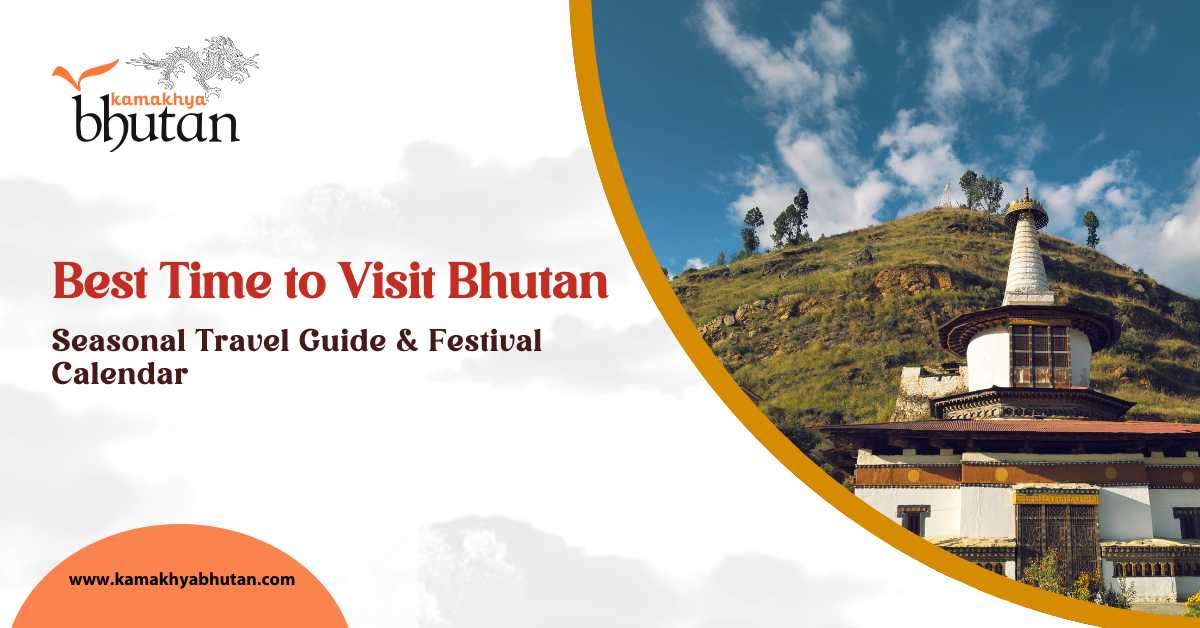
Bhutan’s beauty and charm change through the seasons. Choosing the best time of travel to this Himalayan Kingdom is a crucial aspect of the overall experience of the tourists. From scenic landscapes, serene monasteries, to enjoying the vibrant festivals, it can be more cherishable when you plan your itinerary according to the seasonal specialities of Bhutan. Planning your trip by understanding the best time to visit Bhutan can add value to a holistic travel experience. Some travellers enjoy a quieter nature with fewer crowds, whereas some prefer adventurous trekking, and Bhutan provides all these specificities throughout the changing seasons. In this blog, you can get insights into the best time to plan your trip based on your interests.
Also Read: Hidden Gems of Thimphu: A Local Sightseeing Guide for First-Time Travelers
Why does choosing the Right Time Matter?
Travelling to Bhutan feels like a never-ending wonder throughout every season. During Spring and Autumn, Bhutan remains at its best, offering the perfect balance of pleasant weather and breathtaking vistas of the Himalayas. However, choosing the correct season varies in the travelling experience with certain specificities such as:
- Sightseeing:Usually, spring and summer are considered ideal for exploring various places, along with comfortable weather. However, during the monsoon, the weather remains cloudy, creating challenges in sightseeing and making it not ideal for photograph
- Festival Experience: Bhutan’s festivals are seasonal, such as Tschechus are celebrated in different seasons. Planning according to these festivals will allow you to enjoy the celebrations.
- Trekking Possibilities: With clear and sunny weather, trekking and hiking through the iconic trails of Bhutan becomes more feasible, whereas during the monsoon, the routes remain muddy, and heavy rain interrupts the trekking experience. Considering Bhutan peak season vs off-season feasibilities efore can be significant in travel experience
- Road Conditions: Choosing the correct season is a vital point in a Bhutan trip, as during rainy seasons, the roads in the hills become prone to landslides. Also, during deep winter, possible snowfall can block roads.
- Crowd Level:During off-seasons the famous tourist places remain less crowded, and travelling can be enjoyed without rush. On the other hand, peak seasons remain more crowded and rushed compared to other seasons.
- Hotel Availability: With high demands, the hotels come with high rates in Bhutan during peak seasons and are pre-booked to avoid extra charges. Tourists travelling during off-seasons can avail these hotels in reduced rate with high availability.
Best Seasons to Visit Bhutan
From March to May and September to November, Bhutan remains at its peak seasons with stable weather, blooming surroundings, and key festivals like Paro and Thimphu Tshechu. On the other hand, from June to August in the monsoon and from December to February in winter, it brings some difficulties in trekking and exploring places, but tourists can still enjoy the peaceful surroundings and the black-necked crane festival.
Spring (March-May)
This is the best time to visit Bhutan, especially for the first time travellers. During this time, the weather remains pleasant around 12°C to 22°C with cool mornings and evenings. This serves as ideal weather for sightseeing, with clear skies excellent for cultural tours. This time offers great vistas oF Himalayan mountains and valleys with rhododendrons and magnolias in bloom, best for cultural tours, trekking, and photography.
- Highlights: Spring is the festival season in Bhutan, marked by the famous Paro Tschechu one of the most significant cultural and religious festivals. Travellers can experience festivals blended with iconic sights og Tigers Nest Monastery, Punakha Dzong and Thimpu.
- Travel Advice: Booking the accommodation and tour package in advance can be cost-effective for travelling during this time.
Summer and Monsoon (June to August)
Bhutan’s summer coincides with the monsoon, offering a verdant, quiet, and less crowded atmosphere. Though not considered peak season, this time offers tourists the opportunity to experience a deeper connection with each aspect of travelling, from interacting with the monks, observing the calm nature, and listening to one's own heart. The temperature ranges from 15°C to 30°C with frequent rainfall.
- Highlights: During summer, Bhutan celebrates the Haa Summer Festival in Haa Valley in Paro, the Kurjey Tshechu in Bumthang. Tourists can witness the dramatic clouds, waterfalls, greenery and authentic local life and cultural immersion. The hotels and transport options remain available at lower costs due to reduced demand.
- Things to Consider: Due to cloudy weather, the mountain views are less predictable, and high-altitude trekking is not ideal during this season. Landslides and slippery roads increase the difficulty in travelling through the mountainous roads.
Autumn (September to November)
This season is also considered the peak season and widely regarded as the best overall season to visit Bhutan, with weather ranging from 10°C to 23°C offering clear skies, crisp air and excellent visibility. This time is most ideal for trekking, photography, exploring off-beat places and outdoor activities and visuals of golden rice fields in Punakha Valley.
- Highlights: Autumn celebrates major festivals like Thimpu Tshechu and Wangdue Tshechu, Jambay Lhakhang Drup and others, making it a peak time for cultural and photographic travel. This is a highly recommended season for most travellers.
Winter (December to February)
This is the quietest season, ideal for travellers seeking calm and authenticity. The weather ranges from 0°C to- 10°C and remains below freezing, offering clear, crisp winter skies. High altitude places like Bumthang can receive possible snowfall, making it more magical for tourists.
- Highlights: During winter, the Black-necked Crane festival in Phobjika Valley is one of the most significant events in Bhutan, where tourists can witness these migratory birds. With fewer crowds and serene monasteries, tourists can experience solitude, and seasonal festivals like Punakha Tshechu occur at this time. Certain trekking passes may be closed due to snowfall.
Bhutan’s Festival Calendar (Month-Wise)
Bhutan’s festivals are vibrant and grand, representing the rich culture and traditions. Planning your trip around these festivals can provide opportunities to witness their traditional dances, masked performances, and age-old rituals with a glimpse into the Bhutanese heart.
- March- April: Paro Tshechu in Paro: One of the most famous festivals of the country, Paro Tshechu, is celebrated during this time. This cultural celebration is held at the historic Ringpung Dzong, where monks perform the Cham dance. This festival involves unveiling the giant Thongdrel, a sacred religious painting. Travelling this time is ideal for tourists interested in photography, culture, and tradition
- June: Kurjey Tshechu in Bumthang: This festival is celebrated at Kurjey Lhakhang, one of the most sacred temples in Bhutan. It honours Guru Rinpoche, who first introduced Buddhism in Bhutan. This time is ideal for travellers seeking spiritual and cultural depth.
- September: Thimpu Tshechu in Thimpu: One of the largest and most significant festivals in Bhutan, the Thimphu Tshechu is celebrated in Thimphu, the capital city, attracting locals from all religions. Travellers seeking a grand cultural experience can experience masks, traditional musics and cultural performances at this time.
- September: Wangedue Phodrang Tshechu in Wangedue: In September, this is another festival which is celebrated with grandeur by local communities with traditional dances and music. Travellers seeking a more authentic experience to witness the Bhutanese lifestyle, a less-crowded festival and explore off-beat paths this time can be ideal for them.\
- November: Black-necked Crane Festival in Phobjika Valley: Travellers interested in nature, birds and wildlife can visit this time to witness the Black-necked crane migration from Tibet. This time is ideal for observing the beautiful celebration of nature set in Phobjika Valley.
Conclusion
Planning a trip to Bhutan according to the seasonal specialities and festival calendar can add value to verall travel experience of the travellers. When considering the best month or season to travel to Bhutan, Spring and Autumn are the most ideal times. However, it depends on the preferences of a traveller whether they want to experience the grand celebrations of Bhutan, or want to explore the adventurous paths, or spend serene moments in the monasteries. You can book your customised seasonal tour packages from Kamakhya Bhutan to experience a holistic trip to Bhutan.
